@miket

4reviews79avg genre73avg cinemaJoined Oct 26, 2026
Poster for The Running Man
@miketOct 27, 2026
4735
The Running Man (2025)
Judged as Science Fiction

“A great premise squandered by mechanical storytelling, disposable characters, and a climax that never earns its payoff.”

A Great Premise Let Down by Studio Slop Edgar Wright’s The Running Man feels like a fantastic movie buried deep under a frustrating, "too many cooks" mess where strong foundational ingredients are completely squandered by lazy, mechanical execution. On the surface, it has flashes of what could have been: a strong cast, a solid soundtrack, and occasional clever touches like the satirical cereal reward scene. But within its genre, the film commits a cardinal sin of storytelling: it relies almost entirely on telling instead of showing. Instead of an organic, propulsive survival story, the protagonist is constantly shuffled from place to place, rescued by a revolving door of NPCs whose sole purpose is to spout exposition and explain the movie to the audience. That fatal narrative crutch strips away any real tension or character depth. Lee Pace’s hunter is set up as a formidable presence only to be wasted as a standard-issue villain with zero backstory, all leading to a weak, unearned climax. A major misfire that proves a great premise and a talented director mean nothing when the script collapses under its own lazy shortcuts.

Poster for Superman
@miketOct 27, 2026
8570
Superman (2025)
Judged as Superhero

“A big-hearted return to superhero optimism that understands what makes Superman special, even if the filmmaking never quite matches the greatness of its hero.”

The Return of Hope Superman arrives as a genuinely refreshing breath of fresh air in a superhero landscape that has grown increasingly cynical and stagnant. Within its genre, James Gunn delivers much of what fans have been asking for. Rather than deconstructing the icon or wrapping him in endless brooding, the film embraces what makes Superman work at his core: he's a genuinely good person whose primary motivation is simply wanting to help people. Its warmth, optimism, and earnestness bring a welcome sense of humanity back to the superhero blockbuster. But being faithful to a character isn't the same as making an exceptional film. When judged against cinema as a whole, Superman feels considerably less accomplished. Its strengths lie in its characterization, comic-book energy, and spectacle, while its storytelling and script lack the depth and discipline needed to elevate the film beyond a very good genre experience. It delivers the joy of seeing the Man of Steel fly, but doesn't consistently turn that joy into something more substantial. Ultimately, Superman succeeds because it understands the hero at its center. It's a joyous, big-hearted crowd-pleaser that offers a welcome alternative to superhero cynicism, even if its filmmaking doesn't reach the same heights as its central character.

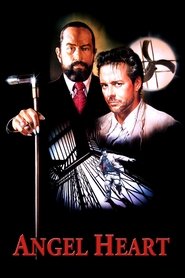
Poster for Angel Heart
@miketOct 26, 2026 (edited)
9694
Angel Heart (1987)
Judged as Neo-noir

“A perfectly constructed descent into hell, where solving the mystery is the very thing that seals the detective's fate.”

The Ultimate Neo-Noir Trap Angel Heart is a masterclass in psychological horror and neo-noir, a slow-burn descent into hell that plays fair with its audience while constructing a devastating, inescapable trap. On the surface, it follows a familiar template: a down-on-his-luck private investigator hired to track down a missing crooner in the sweat-soaked, decaying underworlds of New Orleans and New York. But beneath the voodoo rituals, oppressive humidity, and rotting atmosphere lies a meticulously plotted narrative about fractured memory, guilt, and a soul checkmated by forces beyond its control. What elevates the film into elite territory is its brilliant structural engineering. Louis Cyphre's name offers an early clue, but the film's real accomplishment lies in how organically it integrates its revelations into Harry Angel's investigation. Every step of Harry's frantic search appears to bring him closer to solving a mystery, when in reality it leads him back toward his own damned past. Unlike cheap twists that cheat the viewer, Angel Heart makes its final revelation feel devastatingly earned, transforming the meaning of the investigation upon reconsideration. Supported by Mickey Rourke's desperate, unraveling performance and Robert De Niro's chillingly charismatic presence, Alan Parker's film is a triumph of atmosphere, narrative construction, and psychological horror. A dark, uncompromising masterpiece in which the investigation doesn't simply uncover the truth. It seals Harry Angel's fate.

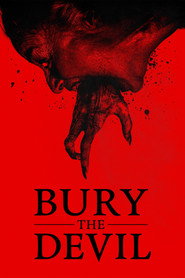
Poster for Bury the Devil
@miketOct 26, 2026 (edited)
8892
Bury the Devil (2026)
Judged as Horror

“A low-budget horror film elevated by exceptional writing, where the final revelations doesn't just shock you—they change everything you thought you understood.”

The Devil Is in the Details Despite its modest production values and occasionally rough performances, Bury the Devil delivers something increasingly rare: writing that fundamentally changes how you understand the story you've just watched. On the surface, it appears to be a familiar supernatural horror film about a vulnerable dementia patient, a caregiver caught in an increasingly terrifying situation, and an evil that refuses to stay buried. But beneath that familiar premise lies a much more disturbing story about grief, guilt, and the lengths people will go to escape the consequences of their past. What elevates the film is the way its ending recontextualizes the characters and their motivations. What initially appears to be a straightforward struggle between the vulnerable and the threatening becomes something far more morally complicated. Earlier events take on new meaning, and characters we thought we understood reveal a much darker side. The result isn't simply a shocking twist, but a shift in how we interpret the entire narrative. This is the kind of storytelling I love. Much like Angel Heart, the film rewards reconsideration, transforming its mystery into something more psychologically unsettling than the premise initially suggests. The film isn't without its imperfections. Its low-budget aesthetic and uneven performances occasionally undermine the material, and not every aspect of its execution reaches the level of its writing. But those shortcomings ultimately feel secondary to what the story accomplishes. Bury the Devil is a reminder that horror doesn't need an enormous budget or elaborate mythology to leave a lasting impression. Sometimes, all it takes is a well-constructed mystery, carefully planted revelations, and an ending that forces you to reconsider everything that came before. A genuinely disturbing and surprisingly thoughtful piece of horror.